How Horowitz Law Pursues the Institution — Diocese, Archdiocese, or Religious Order — for Enabling Miami Clergy Abuse
When a member of the clergy sexually abuses a child or vulnerable person, the abuser is not the only one responsible. In many Miami clergy abuse cases, the diocese, archdiocese, or religious order that employed and supervised the abuser played a direct role in allowing the harm to happen. Pursuing accountability against the institution, not just the individual, is often the most important step a survivor can take toward justice and meaningful change.
For decades, religious institutions across South Florida and throughout the country have transferred known abusers between parishes, ignored complaints from families, and prioritized their own reputation over the safety of children. Taking a closer look at how institutional accountability works in civil court can help survivors see that they may have more legal options than they realize.
Key Takeaways about the Institution’s Role in Miami Clergy Abuse Lawsuits
- Survivors of clergy sexual abuse may hold the institution responsible, including the diocese, archdiocese, or religious order, through a civil lawsuit.
- Institutional liability often centers on what leadership knew, when they knew it, and what they failed to do in response.
- Florida law provides extended and, in some cases, unlimited filing deadlines for survivors of childhood sexual abuse.
- Civil litigation can uncover internal records, patterns of cover-up, and systemic failures that criminal cases often do not address.
- Pursuing institutional accountability can lead to policy reforms that protect future generations.
Why Individual Accountability Is Not Enough in Miami Clergy Abuse Cases
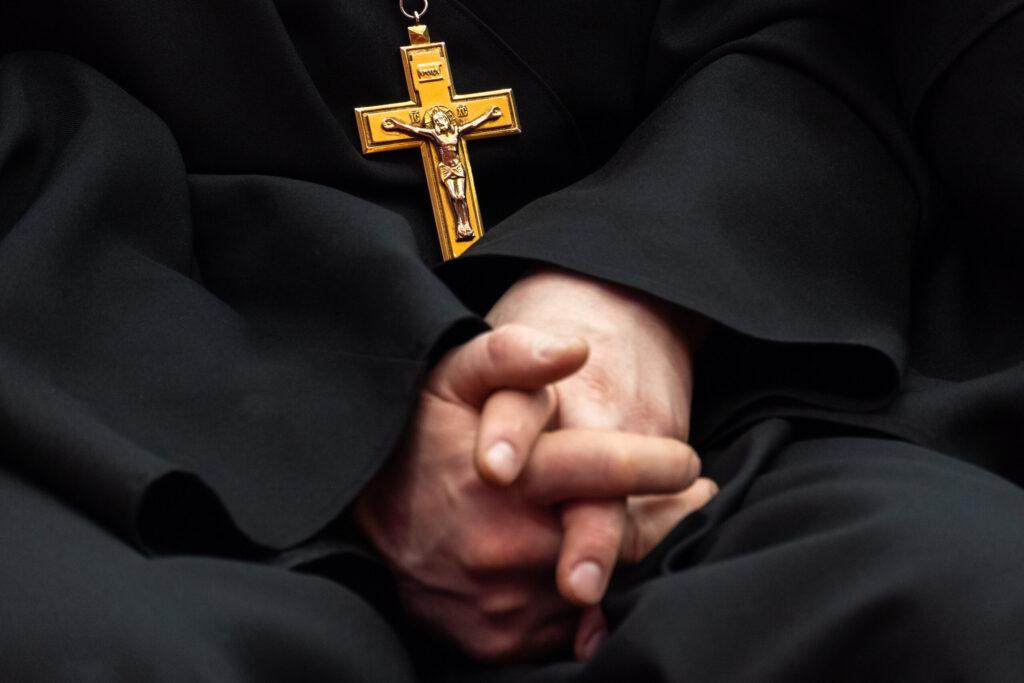
Holding an individual abuser accountable matters. But when a priest, deacon, or other religious leader abuses someone in their care, it rarely happens in a vacuum. Clergy members operate within a structured hierarchy. They are assigned to parishes, given access to children through youth programs and schools, and supervised, at least in theory, by bishops, provincials, and other leadership figures.
When that leadership receives a complaint or a warning sign and chooses to look the other way, the institution itself becomes part of the problem. A survivor who only pursues a case against the individual abuser may never uncover the full picture of what happened and why.
In cities like Miami, where the Archdiocese of Miami oversees dozens of parishes and schools stretching from Key West to Fort Lauderdale, the decisions made at the institutional level affect thousands of families. When those decisions include concealing abuse or quietly reassigning a known offender to a new parish near Coral Gables, Little Havana, or Homestead, the institution bears responsibility for every child placed in harm's way after that point.
How Religious Institutions Enable Clergy Abuse
Institutional enabling of clergy abuse tends to follow recognizable patterns. While every case is different, the following behaviors appear repeatedly in cases across Florida and the rest of the country:
- Transferring known abusers. Rather than removing a priest or religious brother from ministry, leadership reassigns the person to a different parish, school, or diocese, often without informing the new community about the allegations.
- Suppressing complaints. When a family comes forward with a report of abuse, institutional leaders may discourage them from going to law enforcement, pressure them to keep silent, or offer private settlements in exchange for confidentiality.
- Failing to report. Under Florida Statute 39.201, certain individuals are required to report known or suspected child abuse to the appropriate authorities. When institutional leaders fail to do so, they may bear legal responsibility for the harm that follows.
- Destroying or concealing records. Internal files documenting complaints, psychological evaluations, or reassignment decisions may be hidden, altered, or destroyed to prevent accountability.
Each of these actions reflects a deliberate institutional choice. Civil litigation is often the only way to bring these internal decisions to light and hold the institution accountable for the role it played.
The Legal Basis for Institutional Liability in Florida Clergy Abuse Cases
Florida law provides several legal theories that allow survivors to pursue claims against religious institutions. These theories do not require proving that the bishop or archbishop personally committed the abuse. Instead, they focus on the institution's own failures.
- Negligent supervision applies when the institution knew or should have known that a clergy member posed a risk and failed to take reasonable steps to protect the people in that person's care. If a diocese received credible complaints about a priest and continued to place that priest in positions of trust with minors, the diocese may be liable for the resulting harm.
- Negligent retention is closely related. This theory applies when an institution continues to employ or assign someone after learning information that should have prompted removal. A religious order that keeps an accused brother in active ministry despite documented concerns may face liability under this theory.
- Negligent hiring or placement may apply when an institution fails to conduct appropriate background checks or ignores red flags during the assignment process.
Beyond negligence, some survivors may also pursue claims based on vicarious liability, which holds an employer responsible for the actions of its employees when those actions occur within the scope of the employment relationship. Courts have examined whether clergy abuse falls within the scope of ministry duties, and the outcome often depends on the specific facts, including how the abuser used their institutional role to gain access to the survivor.
These legal theories work together to build a comprehensive case against the institution. The goal is to demonstrate that the abuse was not simply the act of one person, but the foreseeable result of institutional choices.
What Civil Discovery Can Reveal About Institutional Cover-Ups
One of the most powerful aspects of civil litigation against a diocese, archdiocese, or religious order is the discovery process. Discovery is the legal phase where each side must share relevant documents, answer questions under oath, and provide access to internal records.
For survivors of Miami clergy abuse, discovery can be transformative. It is often the first time anyone outside the institution sees the internal communications, transfer records, and personnel files that reveal what leadership knew and when.
In clergy abuse cases across the country, discovery has uncovered secret archives maintained by bishops, internal memoranda discussing how to handle "problem priests," psychological evaluations that warned of future abuse, and correspondence between dioceses coordinating the quiet transfer of accused clergy. The U.S. Conference of Catholic Bishops has acknowledged the scope of the abuse crisis, and documents obtained through civil litigation have been central to public understanding of how it was allowed to continue for so long.
In South Florida, where the Catholic community is deeply woven into the cultural fabric of neighborhoods from Hialeah to Miami Beach, these revelations carry particular weight. Families who trusted their parish with their children deserve to know what decisions were made behind closed doors.
Florida's Filing Deadlines Give Survivors Extended Time to Come Forward
Many survivors of clergy sexual abuse do not come forward for years or even decades after the abuse occurred. Shame, fear, confusion, and the powerful influence of the religious institution itself can all contribute to delayed disclosure. Florida law accounts for this reality.
For survivors who were under 16 at the time of the abuse, Florida law imposes no statute of limitations for filing a civil lawsuit. There is no deadline and no expiration date. This protection, which took effect on July 1, 2010, applies retroactively to most past cases, with a limited exception for claims that were already time-barred before that date.
For survivors who were 16 or older at the time of the abuse, the law offers several alternative filing windows:
- A survivor may file until their 25th birthday, which provides time to reach adulthood and begin processing the trauma.
- A survivor may file within four years of leaving the abuser's control, which recognizes that many abuse survivors remain under the influence or authority of the person who harmed them.
- A survivor may file within four years of discovering the connection between the abuse and the resulting injuries, which accounts for the complex ways trauma can delay understanding.
These extended timelines reflect the legislature's understanding that sexual abuse, particularly abuse committed by a person in spiritual authority, creates unique barriers to coming forward. Survivors who believed their time had passed may still have the right to pursue a civil claim.
Why Pursuing the Institution Matters for the Broader Community
Filing a civil lawsuit against a diocese, archdiocese, or religious order is not only about financial compensation, though compensation can play an important role in a survivor's healing. Institutional accountability serves a broader purpose.
When a religious institution is required to answer for its failures in court, it creates a public record of what went wrong. That record can inform policy changes within the institution, prompt greater transparency, and give other survivors the courage to come forward. It also sends a clear message that no organization is above accountability, regardless of its size, influence, or spiritual authority.
In the Miami area, where faith communities are a central part of daily life for hundreds of thousands of families, the stakes of institutional accountability are especially high. Parents who enroll their children in parish schools, youth groups, and religious education programs trust that the institution has taken every reasonable step to keep their children safe. When that trust is broken, the legal system offers a path toward both accountability and reform.
Civil litigation has already driven meaningful change in how religious institutions handle allegations of abuse. Mandatory reporting policies, lay review boards, and greater cooperation with law enforcement have all been influenced by the pressure created through civil cases filed by courageous survivors.
How Horowitz Law Approaches Institutional Clergy Abuse Cases

Horowitz Law has represented hundreds of sexual abuse survivors across the country, including survivors of clergy abuse. The firm's approach is built on thorough investigation, compassionate client support, and a willingness to confront powerful institutions.
When a survivor contacts the firm, the initial conversation is free and completely confidential. From that first call, the legal team works to understand the survivor's experience, identify the responsible parties, and evaluate the potential for institutional liability. The firm's approach includes:
- Thorough investigation. The firm's sexual abuse attorneys have decades of combined experience developing the legal arguments and investigative strategies that complex institutional cases require, including identifying patterns of transfers, cover-ups, and failures to report.
- Survivor-centered support. Horowitz Law connects survivors with counseling services and mental health resources, and the team maintains regular communication throughout every stage of the legal process.
- No upfront cost. The firm never charges a fee unless the case results in a recovery, removing a barrier that prevents many survivors from seeking legal help.
- A proven record of results. The firm's managing partner, Adam Horowitz, secured a jury verdict of over $70 million on behalf of a sexual assault survivor, one of the largest such verdicts ever obtained for an individual in the United States.
No institution is too large or too powerful. Whether the case involves a single parish, an entire archdiocese, or a national religious order, Horowitz Law is prepared to pursue every avenue of accountability.
FAQs for Miami Clergy Abuse Institutional Accountability
Here are answers to some of the questions survivors and their families frequently ask about pursuing institutional claims.
Can I file a lawsuit against the Archdiocese of Miami even if the priest who abused me has died?
Yes. A civil claim against the institution is separate from any claim against the individual abuser. Institutional liability focuses on what leadership knew and failed to do, so the abuser's death does not prevent a survivor from holding the diocese or archdiocese accountable.
What if the abuse happened at a Catholic school rather than a parish?
Catholic schools in Florida are typically operated under the authority of a diocese, archdiocese, or religious order. The institution that controlled the school and employed or assigned the abuser may be held liable for failing to protect students.
Do I need to prove that the bishop personally knew about the abuse?
Not necessarily. Institutional liability can be based on what the institution as a whole knew or should have known. If credible information existed within the organization's records or personnel files, the institution may be responsible even if no single leader admits to personal knowledge.
What if I reported the abuse to the church years ago and nothing happened?
A prior report that was ignored or suppressed can actually strengthen an institutional claim. It may serve as evidence that leadership was aware of the problem and chose not to act, which goes directly to the question of negligence.
Will my case be made public?
Many aspects of civil litigation are part of the public record, but there are steps that can be taken to protect a survivor's privacy throughout the process. An attorney can explain how confidentiality works in your specific situation and what options are available.
Can I pursue a claim if I signed a confidentiality agreement with the church in the past?
Confidentiality agreements related to abuse claims can sometimes be challenged, particularly if the agreement was obtained through pressure, manipulation, or without proper legal representation. An attorney can review the specific terms and advise on next steps.
Take the First Step Toward Holding the Institution Accountable
If you or someone you love was sexually abused by a member of the clergy in Miami or anywhere in Florida, the institution that allowed the abuse to happen may owe you answers, accountability, and justice. Horowitz Law is ready to listen, and the consultation is always free and confidential. There is never a fee unless the firm recovers compensation on your behalf.
Call today at 888-283-9922 to speak with a compassionate legal team that believes survivors and fights for the accountability they deserve.